
Key Takeaways
- Dependent elderly adults may need daily assistance, but they can sometimes do more than their families realise.
- Doing tasks for older adults unnecessarily may reduce opportunities to practise movement and maintain existing abilities.
- At The Home Physio, we assess strength, balance, and functional movement to determine the appropriate level of assistance.
- Rehabilitation may improve selected activities or help maintain existing abilities, even when full independence is unrealistic.
- Maintaining independence in older adults means balancing safety, personal preferences, and appropriate elderly care support.
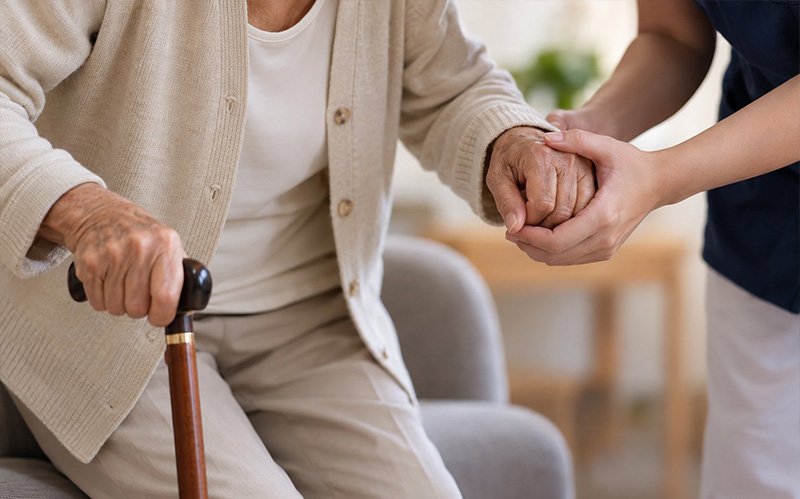
Your elderly parent takes longer to stand from the sofa, so you offer your arm. Dressing has become difficult, so you help them finish. Before long, you might find yourself assisting with almost every daily activity.
These actions come from concern. However, when caring for dependent elderly loved ones, it is worth asking whether some assistance has become routine rather than necessary.
At The Home Physio, we consider what an older adult can still do safely, what is limiting their abilities, and whether rehabilitation could help them participate more independently.
What Does It Mean to Be a Dependent Elderly Adult?
Dependence generally means needing assistance with everyday activities such as bathing, dressing, walking, or transferring between positions.
However, dependence is not all-or-nothing.
Someone might walk independently indoors but require support outdoors. Another person may need assistance standing from a low chair yet move comfortably once upright.
Dependence can also increase temporarily after illness, surgery, or hospitalisation.
Before assuming someone needs permanent assistance, consider the reason behind their limitations and whether rehabilitation could change their abilities.
When Does Helping Become Too Much?
Caregivers naturally want to prevent falls and make daily activities easier. However, regularly completing tasks that someone can safely attempt may reduce opportunities to use their existing abilities.
Consider an older adult who takes longer to stand.
If a caregiver immediately lifts them every time, they may have fewer opportunities to practise the movement. However, expecting them to stand without help could be unsafe if they have significant weakness or poor balance.
The key is understanding what assistance is genuinely required.
Singapore’s HealthHub offers similar advice on encouraging older adults to participate in self-care, including providing sufficient assistance and maintaining a safe environment.
How We Assess Whether Independence Can Improve
When assessing dependent elderly individuals, we look beyond whether they can complete a task.
We want to understand why they struggle.
For example, someone requiring assistance to stand from the toilet may have:
- Reduced leg strength
- Pain or restricted joint mobility
- Difficulty shifting their weight forwards
- Poor standing balance
- Unsuitable toilet height or insufficient hand support
Each finding may change our approach.
If weakness is the main limitation, we might introduce appropriate strengthening exercises. If the patient struggles with weight transfer, supported sit-to-stand practice may be more relevant.
Where environmental factors contribute, we may suggest suitable grab bars or seating adjustments.
We also assess how much support is needed. Someone may require hands-on assistance, while another person might manage with supervision or verbal guidance.
These distinctions help us develop rehabilitation goals without compromising safety.
When Should Families Consider Rehabilitation Alongside Care?
The loss of independence in elderly adults is not necessarily permanent.
Families may consider rehabilitation when someone becomes increasingly reliant on assistance following illness, hospitalisation, or reduced activity.
However, expectations should reflect the underlying condition.
For someone recovering from prolonged bed rest, improving strength and endurance might reduce assistance needs.
For an older adult with a progressive neurological condition, maintaining their ability to participate in transfers could be a more realistic goal.
Even when full independence is unlikely, rehabilitation may help someone contribute to movements that previously required more physical effort from their caregiver.
We therefore assess existing abilities and medical circumstances before determining what progress may be achievable.
How Home Physiotherapy Can Complement Elderly Care
Care and rehabilitation serve different but complementary purposes.
Personal care helps someone manage activities they cannot safely complete alone. Physiotherapy focuses on maintaining or improving movement and functional ability.
Through physiotherapy for the elderly at home, we can assess how these difficulties appear during familiar routines.
A patient might demonstrate sufficient leg strength during exercises but struggle to rise from their favourite armchair.
We would examine the chair height, foot positioning, balance, and movement technique before deciding whether additional strengthening or transfer practice is needed.
Our in-home physiotherapy for seniors may also include gait training, balance exercises, endurance work, and caregiver education.
The aim is to address movements that limit daily participation, rather than prescribing exercises without a functional purpose.
Finding the Right Balance Between Assistance and Independence
Supporting dependent elderly family members does not mean encouraging them to attempt every task alone.
Instead, caregivers can consider three questions:
- Which parts of this activity can my loved one perform safely?
- Do they require physical assistance, supervision, or additional time?
- Have their abilities changed enough to warrant reassessment?
For example, an older adult may still need help walking to the bathroom but manage parts of the transfer with appropriate support.
A physiotherapist can guide mobility and transfer assistance, while occupational therapists may advise on personal-care techniques and adaptive equipment where needed.
It is also important to ask your loved one which activities they want to continue managing themselves. Independence is not only about completing tasks without assistance. Having a say in daily routines and personal care decisions can remain meaningful even when physical support is necessary.
The goal is to preserve participation without creating unnecessary risks.
About The Home Physio
At The Home Physio, we recognise that caring for dependent seniors involves balancing necessary support with opportunities to maintain function.
Our physiotherapists provide individualised home physio for elderly adults in Singapore, assessing mobility, balance, transfers, and everyday movement to guide rehabilitation.
We also support caregivers with practical guidance on safe assistance and realistic functional goals.
Contact us to discuss how home physiotherapy can complement your loved one’s care.
Frequently Asked Questions
Can dependent seniors regain independence?
Some older adults may regain abilities through rehabilitation, particularly after illness or inactivity. Outcomes depend on the underlying condition, medical history, and current functional abilities.
How do I know if I am helping my elderly parent too much?
Consider whether you routinely do tasks they could still manage safely. A professional assessment can clarify when assistance, supervision, or independent practice is appropriate.
Is physiotherapy useful for elderly adults who need full-time care?
It may be. Physiotherapy can focus on maintaining joint mobility, supporting transfers, improving positioning, or preserving existing abilities, depending on the individual’s condition.