
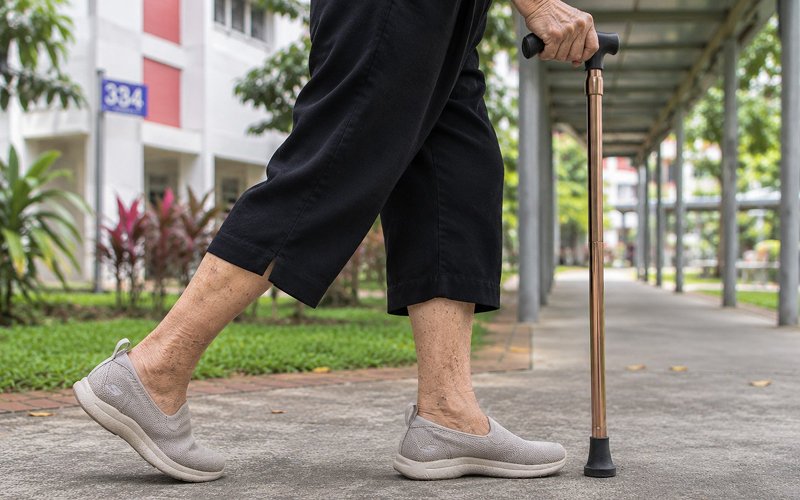
Key Takeaways
- Fall risk in elderly adults can increase due to muscle weakness, poor balance, medical conditions, medication effects, and environmental hazards.
- Repeated near-falls, holding onto furniture, and difficulty standing may indicate a need for assessment.
- Home physiotherapy may help address physical limitations contributing to instability, even before someone experiences a fall.
- At The Home Physio, we assess strength, balance, walking, and everyday movement before recommending rehabilitation.
- Some fall risks require medical assessment or other healthcare interventions alongside physiotherapy.
Your elderly parent starts holding onto furniture when walking. They hesitate before standing or avoid going outside because they are afraid of falling. Although they have not fallen, you begin wondering whether professional support is necessary.
Fall risk in elderly adults does not depend solely on previous falls. Changes in strength, balance, walking patterns, and confidence can indicate increased vulnerability.
Home physiotherapy may be an appropriate next step when these difficulties involve mobility or balance. However, unexplained dizziness, fainting, medication effects, or sudden changes in movement may require medical assessment first.
At The Home Physio, we examine what is making everyday movement difficult before determining how rehabilitation may help.
Is Home Physiotherapy the Right Next Step? A Checklist for Families
If you are unsure whether your elderly loved one needs physiotherapy, consider the following questions:
| Check | What to Look Out For |
|---|---|
| ☐ Repeated near-falls | Frequently stumbling, losing balance, or grabbing furniture for support. |
| ☐ Changes in walking patterns | Taking smaller steps, walking noticeably slower, or struggling when turning. |
| ☐ Difficulty with everyday movements | Needing more effort or assistance to stand, get out of bed, or walk to the bathroom. |
| ☐ Avoiding activities due to fear | Becoming reluctant to use stairs, go outdoors, or walk independently. |
| ☐ Reduced mobility after illness | Appearing weaker, less steady, or more dependent following illness or hospitalisation. |
| ☐ Home obstacles affecting movement | Struggling with narrow walkways, slippery flooring, or unsuitable furniture. |
If you ticked one or more boxes, arranging a professional assessment may be worthwhile, particularly if the changes are new, worsening, or affecting daily independence.
Home physiotherapy can help identify physical limitations contributing to instability and determine whether strengthening, balance training, or functional movement practice is appropriate.
However, sudden weakness, fainting, or unexplained dizziness requires medical assessment rather than relying on physiotherapy alone. Sudden stroke-like symptoms require emergency attention.
What Increases Fall Risk in Elderly Adults?
Falls rarely result from a single factor. Several physical, medical, and environmental conditions can increase vulnerability.
Common contributors include:
- Muscle weakness: Reduced leg strength can make standing, walking, and recovering from instability more difficult.
- Balance difficulties: Impaired coordination or sensation may affect stability during turns and transfers.
- Medical conditions: Stroke, Parkinson’s disease, arthritis, and peripheral neuropathy can affect movement.
- Medication effects: Certain medicines may cause dizziness, drowsiness, or blood pressure changes.
- Environmental hazards: Loose rugs, slippery flooring, and clutter can increase tripping risks.
- Fear of falling: Avoiding movement may contribute to further physical deconditioning.
Because these factors can overlap, identifying the cause is more useful than simply telling someone to be careful.
What Warning Signs Should Families Look Out For?
An older adult does not need to experience a fall before their mobility deserves attention.
Families may notice:
- Holding onto walls or furniture while walking
- Taking smaller steps or moving noticeably slower
- Difficulty standing from chairs
- Hesitating when turning or changing direction
- Repeated near-falls
- Avoiding stairs or familiar activities
For example, someone may walk steadily along a corridor but become unsteady when turning towards the bathroom.
This suggests that walking distance alone may not explain the difficulty. Balance, coordination, or weight transfer during turns may require closer assessment.
Why Avoiding Movement Is Not Always the Answer
When families worry about falls, encouraging an older adult to remain seated can seem protective.
However, prolonged inactivity may contribute to reduced muscle strength, endurance, and balance, making everyday movement increasingly difficult.
Singapore’s HealthHub recommends regular physical activity, including strength and balance exercises, to reduce fall risk.
For older adults who already experience instability, activities should be adapted to their physical abilities and supervised where necessary.
The goal is to maintain appropriate movement without exposing someone to unnecessary risks.
How We Assess Fall Risk in Elderly Adults Through Home Physiotherapy
Through home physio for elderly, we assess how patients move within their familiar surroundings.
Depending on their condition, we may examine:
- Strength and balance: Can they stand steadily and control weight shifts?
- Walking patterns: Do they shuffle, take uneven steps, or struggle with turns?
- Transfers: Can they move safely between sitting and standing?
- Endurance: Does movement become less controlled with fatigue?
- Home environment: Are furniture arrangements or flooring creating obstacles?
- Confidence: Are certain movements avoided because of fear?
Consider someone who struggles to rise from a low sofa.
We would assess whether reduced leg strength, poor weight-transfer technique, unsuitable seating height, or impaired balance contributes to the difficulty.
These findings help us choose appropriate exercises and determine whether environmental adjustments are necessary.
How Home Physiotherapy May Help Improve Stability
Rehabilitation should address the limitations identified during assessment.
Strengthening and Balance Training
Balance training for seniors may include supported standing, controlled weight transfers, or exercises involving changes in position.
Someone with reduced leg strength may benefit from progressive strengthening, while someone who becomes unsteady during turns may require targeted balance and coordination practice.
We adjust exercise difficulty according to the patient’s abilities and safety.
Walking and Transfer Practice
Improving stability in older adults may also involve practising movements needed for daily activities.
For example, our physiotherapy at home for seniors we may focus on controlled turning rather than increasing walking distance if directional changes are the main difficulty.
Home Safety and Caregiver Guidance
Our geriatric home care approach also considers environmental obstacles and caregiver assistance.
We may recommend suitable changes to seating arrangements, walking pathways, or transfer techniques.
This provides mobility support for elderly adults while preserving appropriate opportunities for independent movement.
What Can Families Do Before a Fall Happens?
Families can make practical changes while arranging professional assessment:
- Clear frequently used walking pathways.
- Remove loose rugs and electrical cables.
- Improve lighting near bathrooms and stairs.
- Ensure seating is stable and appropriately positioned.
- Allow sufficient time for standing and walking.
Avoid introducing challenging balance exercises without professional guidance if your loved one is already unsteady.
About The Home Physio
At The Home Physio, we understand that fear of falling can affect an older adult’s confidence and independence.
Our physiotherapists provide individualised home rehabilitation in Singapore, assessing strength, balance, walking, and functional movement to guide treatment.
Whether your loved one has experienced a fall or is showing early signs of instability, we work towards practical goals that support safer movement at home.
Contact us to discuss your loved one’s mobility and rehabilitation needs.
Frequently Asked Questions
Can home physiotherapy prevent falls completely?
No intervention can eliminate every fall risk. However, suitable strengthening, balance training, mobility practice, and environmental adjustments may help reduce the likelihood of falls.
Should my elderly parent see a physiotherapist after a near-fall?
Repeated near-falls warrant assessment, even without an actual fall. A physiotherapist can evaluate mobility difficulties and identify whether rehabilitation or further medical review is appropriate.
How often should elderly adults practise balance exercises?
Frequency depends on their condition, abilities, and fall risk. A physiotherapist can recommend an appropriate schedule and safe progression following assessment.