
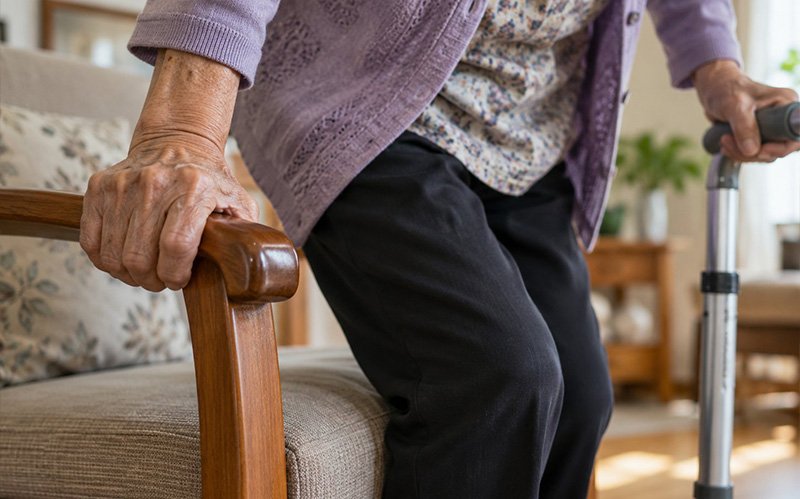
Key Takeaways
- Mobility problems in elderly adults can result from muscle weakness, pain, balance difficulties, prolonged inactivity, or underlying medical conditions.
- Difficulty standing, slower walking, and reduced participation in daily activities may indicate declining mobility.
- At The Home Physio, we assess what limits movement before selecting exercises or setting rehabilitation goals.
- Progress can mean improving transfers, endurance, and everyday independence, not simply walking further.
- Home physio for elderly adults lets rehabilitation address movement difficulties in familiar surroundings.
Your parent used to walk to the nearby market without much hesitation. Now, they hesitate at the front door, avoid longer outings, or ask someone to accompany them to the bathroom.
These changes are sometimes dismissed as normal ageing. However, mobility problems in elderly adults may be related to treatable weakness, pain, balance difficulties, or inactivity. Some limitations can improve through rehabilitation, while others require ongoing management.
At The Home Physio, we first want to understand why movement has become difficult. That distinction helps us determine which activities to prioritise and what progress may realistically look like.
1. Understand What Is Actually Limiting Mobility
Elderly mobility decline rarely has a single explanation.
Someone who struggles to stand from a chair may have weak leg muscles, painful knees, or difficulty transferring their weight forwards.
Another person might walk comfortably indoors but avoid outdoor activities because they feel unsteady.
During our assessments, we consider:
- Lower-limb strength and endurance
- Balance, coordination, and walking patterns
- Joint movement and pain
- Transfers between the bed, chair, and toilet
- Fatigue, medical history, and previous activity levels
- Confidence and environmental obstacles
We also consider whether symptoms such as dizziness, recent medication changes, or visual difficulties may require further medical assessment, rather than assuming every movement problem can be addressed through exercises alone.
These findings influence treatment.
For example, if someone can stand steadily but struggles when turning, repeatedly practising straight-line walking may not address their main difficulty.
We would examine how they shift their weight, reposition their feet, and maintain balance while changing direction. Rehabilitation may then involve supported turning practice or targeted balance exercises.
Understanding the limiting factor helps us select more relevant activities, rather than prescribing the same exercises to every older adult.
2. Look Beyond Walking Distance When Measuring Progress
Families often measure mobility recovery by how far someone can walk.
However, reduced mobility in older adults can affect much more than walking distance.
Consider an older adult who can walk across the living room but needs substantial assistance getting out of bed.
Improving their transfer technique may make a greater difference to daily independence than extending their walking distance.
We therefore consider whether patients can:
- Stand from familiar chairs with less assistance
- Move safely between rooms
- Manage essential bathroom transfers
- Remain upright for longer without excessive fatigue
- Participate in personal care and household activities
These functional goals provide useful ways to monitor improvement.
They also help us determine whether changes in strength or balance are translating into meaningful daily benefits.
3. Rebuild Movement Through Appropriate Progression
Following illness, surgery, or hospitalisation, older adults may become less active because of fatigue, weakness, or fear of falling.
Reduced activity can contribute to further muscle deconditioning.
Singapore’s physical activity recommendations for older adults encourage a combination of aerobic, strengthening, and balance activities.
However, the appropriate starting point depends on each person’s abilities and medical condition.
For instance, someone who becomes exhausted after a short walk may initially benefit from shorter walking intervals, planned rests, and targeted strengthening.
As endurance improves, we can adjust the challenge through longer activity periods or more demanding movements.
For another patient, balance exercises or transfer practice may take priority.
The aim is to make activities progressively challenging without exceeding what the person can safely manage.
4. Identify Home Obstacles Affecting Movement
Mobility difficulties among elderly adults can become more apparent in certain home environments.
Narrow walkways, slippery bathroom floors, loose rugs, and unsuitable furniture heights may make existing physical limitations harder to manage.
One advantage of providing physiotherapy at home is being able to observe these challenges directly.
A patient might stand comfortably from a dining chair but struggle to rise from a low sofa.
Instead of assuming leg strength alone is responsible, we consider sofa height, available armrests, foot positioning, and how the patient shifts their weight.
Treatment may combine transfer practice with suitable environmental adjustments.
This helps us address both the person’s physical abilities and the practical demands of their home.
5. Support Independence Without Removing Necessary Help
Loss of independence in older adults can affect confidence and willingness to participate in daily activities.
Families understandably want to prevent falls, but completing every task for an older adult may sometimes reduce opportunities to practise movement.
We encourage caregivers to distinguish between activities requiring hands-on assistance and those their loved ones can attempt safely with supervision.
For example, someone may be able to wash their face independently but need support when standing at the sink.
Through geriatric home care, we can guide caregivers on suitable assistance techniques and appropriate supervision levels.
Our physiotherapy at home for seniors also focuses on functional activities relevant to daily routines.
When Should Families Seek Professional Assessment?
Not all mobility problems experienced by elderly adults are reversible, particularly when chronic neurological or degenerative conditions are involved.
However, noticeable deterioration deserves assessment rather than being attributed automatically to age.
Seek professional advice for repeated falls, increasing difficulty standing, worsening walking ability, or greater dependence after illness.
Sudden weakness, facial drooping, speech difficulties, or abrupt loss of walking ability require emergency medical attention.
About The Home Physio
At The Home Physio, we provide individualised elderly rehabilitation in Singapore, assessing strength, balance, mobility, and everyday movement to guide treatment.
Our physiotherapists work with older adults and their caregivers to address functional difficulties, support appropriate activity, and develop realistic rehabilitation goals within familiar home environments.
Contact us to discuss how home physiotherapy may support your loved one’s mobility and independence.
Frequently Asked Questions
Can physiotherapy improve mobility problems in older adults?
Some limitations may improve with strengthening, balance training, and functional rehabilitation. Outcomes depend on the underlying condition, medical history, and individual abilities.
How often should an elderly person receive physiotherapy?
Frequency depends on their condition, rehabilitation goals, and exercise tolerance. A physiotherapist can recommend a suitable schedule after assessment.
What if my elderly parent refuses to exercise?
Consider whether pain, fatigue, fear of falling, or unfamiliar activities are contributing to their reluctance. A physiotherapist can help identify manageable activities connected to their interests and routines.