
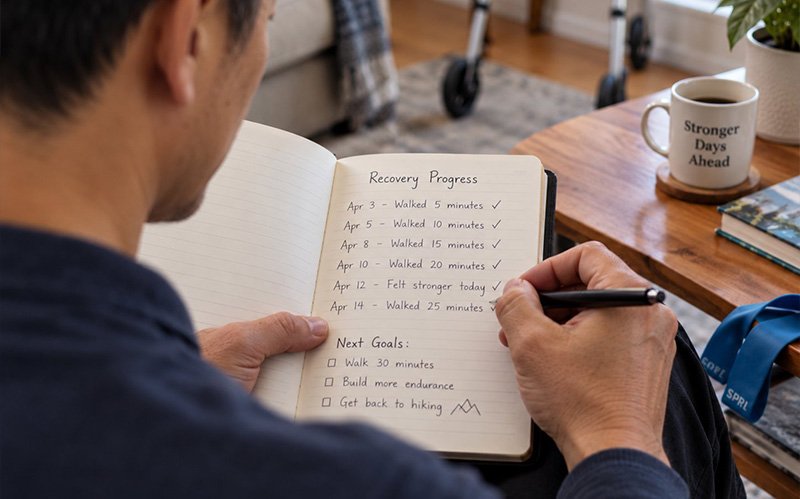
Key Takeaways
- A recovery milestone is a measurable improvement in mobility, strength, endurance, or everyday function.
- Slower physiotherapy progress does not necessarily mean recovery has stopped, but persistent plateaus should be reassessed.
- Pain, fatigue, weakness, and increasingly demanding activities can affect how quickly you reach rehabilitation milestones.
- At The Home Physio, we consider what is limiting progress before adjusting exercises or treatment goals.
- Returning to everyday activities is an important measure of rehabilitation success, alongside physical improvements.
Perhaps you could barely stand after surgery, but within a few weeks, you were walking around your home. Now, despite continuing physiotherapy, you seem to be making little progress.
Missing a recovery milestone does not necessarily mean rehabilitation has stopped working. Improvements may become less noticeable as activities grow more demanding. However, persistent difficulties can also suggest that your rehabilitation plan needs reviewing.
At The Home Physio, we look beyond how quickly patients meet their targets. We want to understand what has changed, what remains difficult, and whether their exercises are addressing the factors limiting recovery.
What Counts as a Recovery Milestone in Physiotherapy?
Recovery milestones are measurable achievements used to monitor rehabilitation progress.
Some are significant, such as walking independently or returning to work. Others involve smaller changes:
- Standing for longer without fatigue
- Walking further before needing to rest
- Rising from a chair with less assistance
- Maintaining balance when changing direction
- Completing household tasks more independently
These changes help us assess whether treatment is improving a patient’s abilities.
However, achieving a milestone does not automatically mean someone is ready for the next challenge.
A patient who can walk independently along a corridor may still struggle with uneven surfaces. We therefore consider movement quality, consistency, and the assistance required alongside the milestone itself.
Why Physiotherapy Recovery Milestones May Start Slowing Down
Recovery does not always progress at a consistent rate. Several factors can explain why improvements become less noticeable.
1. Activities Become More Demanding
Early rehabilitation may focus on standing, transferring between positions, or walking short distances.
Later activities require greater coordination, balance, and endurance.
For instance, post-surgery recovery progress might initially involve walking indoors without assistance. The next goal could be climbing stairs while maintaining good movement control.
Although both involve the same lower-limb muscles, the second task creates different physical demands.
2. Pain, Fatigue, or Weakness Remains
A patient might regain enough strength to walk short distances but struggle to maintain their walking pattern when tired.
Others may experience swelling, restricted joint mobility, or discomfort during particular movements.
These difficulties require different interventions. Increasing exercise repetitions will not necessarily address a restricted joint or poorly controlled movement.
3. Daily Routines Affect Recovery
Returning to work, household responsibilities, or social activities may reduce the time and energy available for rehabilitation.
We also consider whether patients are managing their activity levels appropriately.
Someone who becomes exhausted after completing household chores may need adjustments to exercise scheduling or activity pacing rather than a more demanding programme.
How We Tell Whether Progress Has Actually Plateaued
Slower improvement and a genuine plateau are not necessarily the same.
A patient might walk the same distance as last month but now complete it with fewer rests or less assistance. Their endurance or movement efficiency may still be improving.
However, if several measures remain unchanged across repeated assessments, we would examine possible reasons.
Depending on the condition, we may review:
- Strength and endurance: Is weakness or fatigue limiting performance?
- Joint mobility: Is restricted movement affecting everyday tasks?
- Balance and coordination: Does instability occur during turns or transfers?
- Pain and symptoms: Are discomfort or new symptoms restricting movement?
- Exercise difficulty: Is the programme appropriately challenging?
- Daily function: Are improvements translating into greater independence?
For example, a patient may perform standing exercises well but struggle to rise from a low sofa.
We would examine whether the problem involves leg strength, limited forward weight transfer, or difficulty coordinating the movement.
The findings help determine whether to modify exercise selection, provide additional support, or practise the specific transfer.
People with complex rehabilitation needs following traumatic injury should review goals regularly and adapt rehabilitation plans as recovery changes.
How We Adjust Home Physiotherapy When Recovery Slows
With home physiotherapy, we can assess how patients perform activities in the environment where they spend much of their time.
Someone might demonstrate good balance during structured exercises yet struggle when turning around furniture or getting out of bed.
Observing these difficulties helps us connect rehabilitation with the movements patients actually need.
Adjusting Exercises Based on What Is Limiting Progress
Suppose a patient walks comfortably for five minutes but begins taking shorter, less controlled steps as fatigue develops.
Rather than immediately increasing walking distance, we might assess endurance, muscle strength, and movement control.
Depending on the findings, treatment could involve shorter walking intervals, targeted strengthening, or gradually increasing walking duration.
The aim is to address the limitation preventing further progress, not simply make exercises harder.
Making Milestones Relevant to Everyday Life
Our home rehabilitation services also allow us to set practical goals around familiar routines.
For someone recovering from prolonged hospitalisation, preparing a simple meal or moving independently between rooms may be more relevant than walking a particular distance.
These activities help us assess a patient’s return to everyday function while identifying movements that still require assistance.
When Should You Be Concerned About Slower Recovery?
A temporary slowdown may not be unusual. However, worsening mobility, increasing pain, repeated falls, or a noticeable loss of previously regained abilities should not simply be dismissed as part of recovery.
A physiotherapist can assess whether rehabilitation changes are appropriate or whether medical review is needed. Sudden weakness, new speech difficulties, or other possible stroke symptoms require emergency medical attention.
Recognising when recovery needs further investigation is just as important as celebrating progress.
About The Home Physio
At The Home Physio, we understand that recovery does not always follow a predictable timeline. Our physiotherapists provide individualised rehabilitation in Singapore, assessing physical limitations, movement quality, and everyday challenges to guide treatment.
Whether you are recovering from surgery, stroke, or prolonged immobility, we work towards rehabilitation goals relevant to your circumstances.
Browse our home physio sessions or contact us to discuss your rehabilitation needs.
Frequently Asked Questions
Is it normal for physiotherapy progress to slow down?
Progress may slow as rehabilitation goals become more demanding. However, persistent plateaus or declining function should prompt reassessment to identify possible limitations.
What happens if I cannot achieve a recovery milestone?
Your physiotherapist may review your strength, mobility, symptoms, and exercise programme. The milestone or treatment approach may need adjusting based on the findings.
Should I continue physiotherapy if recovery has plateaued?
A plateau warrants reassessment rather than automatically continuing the same programme. Your physiotherapist can determine whether treatment modifications, further medical review, or alternative rehabilitation support may be appropriate.